


Welcome to The Only Story in Town, where you get one great business story, every week. We look at how great institutions were built, why others failed, and the people, decisions and rivalries that changed everything. Please share The Only Story in Town with family, friends and colleagues
It’s 3-0 after 15 minutes. It can’t get any worse than this. Can it?
It can.
Now the goalkeeper is coming off. This is crazy. No-one ever substitutes a player this early in a match, let alone your goalkeeper.
Antonin Kinsky is just 22 years old. He has made mistakes for the first and third goals, gifting the ball to the opposition. But this is a public humiliation. He walks off the pitch disconsolate, patted on the back by his teammates in a vague show of support as he goes.
The manager who decided to take off Kinsky ignores him as he plods past. This man - Igor Tudor - has already lost his first three games as Tottenham Hotspur manager. It will soon be four. He was brought in to make a short-term impact. He has done that. He has made things even worse.

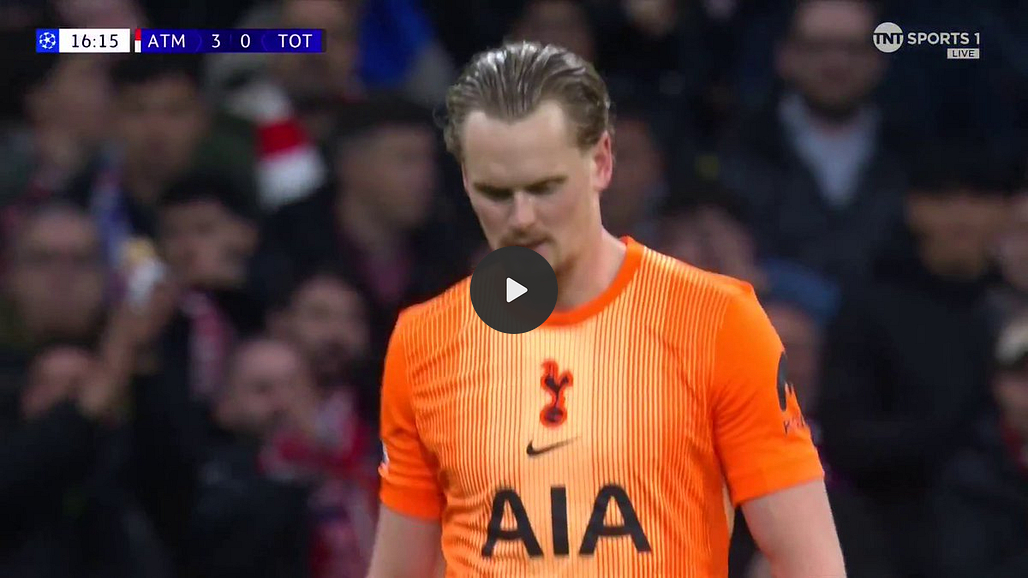
Five minutes later, there is another goal. It is Atletico Madrid 4 Tottenham 0.
Is this really happening? Just seven years ago, Tottenham played in the Champions League final in the same stadium. That feels like a long time ago now.
This is what happens when the bottom falls out of an organisation. Minds are frazzled. Bizarre decisions are made.
Brilliant leaders have a paranoia that everything could go wrong at any moment - that everything they built could collapse tomorrow.
Simon Arora once described this to me as “healthy paranoia”. It is a type of humility, he explained. It is recognising that you are not perfect and that bad things could happen to your organisation if you are not careful. “That healthy paranoia makes you a better leader because you plan for those eventualities,” he added.
Arora bought a small collection of rag-tag shops in northern England for £525,000 and built them into a discount retailer worth £5 billion. This was B&M. Yet he worried that the botched opening of a new warehouse could lead to B&M going bust. It didn’t, of course.
It is almost certainly not good for your mental wellbeing to think like this. But it is a common trait in the founders and leaders of multi-billion-pound companies. These leaders run organisations employing thousands of people and generating billions of pounds in revenue. They are not just going to disappear.
But this is what is happening to Tottenham Hotspur. The bottom has fallen out. The ninth biggest football club in the world by revenue could be relegated from the Premier League. The club with the gleaming £1 billion stadium could be hosting Lincoln and Stockport next season. A nightmare is coming true.
Not long ago, Tottenham was heralded as the best-run football club in Britain, if not the world. Now it is struggling to do the most basic thing for a football club: win matches. The unthinkable has become a reality. How did this happen?
The doom loop
There is a name for what is happening to Tottenham - the doom loop.
This phrase was coined by Jim Collins, the acclaimed management guru. Tottenham fans will recognise some of the symptoms that Collins identified in a doom loop - constant changes of strategic direction, decisions taken without addressing or understanding the core problem, fanfare about new initiatives and strategies, and regular pleas for unity and attempts to “enlist the troops”.
An organisation in a doom loop finds itself in a downward spiral where every action you take unwittingly sends you further down the spiral. All forward momentum is lost and every attempt to try to get the wheels moving again sends you in the wrong direction. What is even scarier is that the people within the organisation are really trying to improve and change things.
Collins published all this in his 2001 book Good to Great, one of the best-selling business books of all-time. He and his team wanted to understand why some organisations went from showing promise to becoming truly world-class and the best at what they did, while others who showed promise simply fell away and disappeared. They studied the performance of 1,435 businesses over 40 years.
They found the organisations that went from good to great entered a flywheel - a virtuous circle where every improvement led to another. They had the discipline to stick with a simple strategy over many years. They had a steadfast commitment to excellence over the quick fix.
In contrast, those that fell into a doom loop changed direction at the merest sign of a problem. There was little discipline. They did this again and again, lurching in different directions and taking away any momentum. They would often make a splashy acquisition and buy a business - but this was about trying to grab some growth rather than investing in the foundations.
Ultimately, when you are in a doom loop, everyone in the organisation sees their spirit drain away. No-one is sure of the right thing to do any more because there is no vision.
Again, this will all sound familiar to Tottenham fans.
Since 2019, Tottenham have had nine interim and permanent managers. These managers have all had radically different personalities and tactics. Antonio Conte - the fiery Italian pragmatist. Ange Postecoglou - the buccaneering Australian. Thomas Frank - the urbane Dane. Igor Tudor - the fixer.
Over the same period a net £700 million has been spent on new players. But these players have not been bought for a particular system. As Tottenham has zig-zagged between managers and strategies they now have a collection of players that don’t fit any.
In January, Tottenham fans also got a plea for unity and support, which is common in a doom loop. Vinai Venkatesham, the chief executive, issued a public message in which he spoke of a “genuine reset” at Tottenham and how the board “share the same ambition as our supporters”.


